
Keeping a useful nappy log
A practical way to record changes across caregivers, check totals and bring clear observations to appointments.
The essentials
- Agree on categories and who records each change.
- Check the timeline before interpreting a daily total.
- Keep observations clear and seek help about concerns, not just counts.
Decide what you want the log to help with
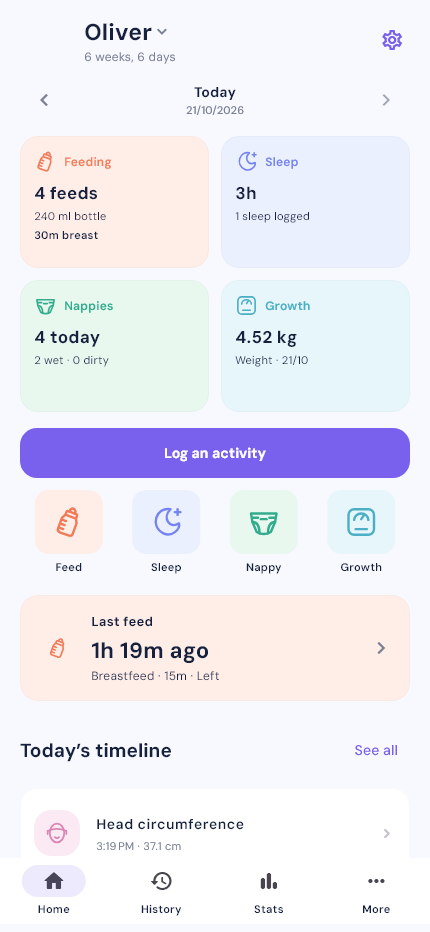
A nappy log can answer everyday questions: when was the last change, did the grandparent already change the baby, or what happened on the days before an appointment? Choose a simple habit that answers your family's questions without making every change an administration task.
If a health professional has asked you to keep a particular record, check exactly what they want to know and for how long. A general-purpose count may not contain the details they need. Their instructions are more useful than guessing which fields will look impressive in a summary.
Agree on one entry for one change
Use the same categories across caregivers: wet, dirty or mixed. A mixed nappy is one change containing both wee and poo, not two separate events. Save the time the change happened rather than the time you opened the app later.
Before adding an entry, check whether someone has already saved it. This matters when two adults are involved in the same change or when an offline phone is catching up. If you are unsure, ask the other person instead of adding a second entry ‘just in case’.
Separate counts from clinical meaning
Wet nappies are one part of assessing how a baby is feeding, but interpretation depends on age and other observations. The early newborn days are different from later weeks. A generic number on a chart cannot stand in for age-appropriate advice from your midwife or child health nurse.
Tell your professional about feeding, growth and your baby's general wellbeing as well as the nappy record. Ask them what changes should prompt contact for your baby. This gives the log a clear purpose without turning every ordinary variation into an alert.
Further guidance: NHS: Is my baby getting enough milk?
Use specific words for changes you notice
Baby poo changes over time and with feeding, so a note such as ‘different today’ leaves useful details out. If something worries you, describe the colour, consistency, timing and how your baby seems, using ordinary language. The note is an observation, not a diagnosis.
Do not compare a newborn's nappy directly with an older baby's record and assume the difference is a problem. The linked nappy guide explains common changes across the early days. If you are unsure about what you are seeing, ask your healthcare team rather than trying to classify it from the app alone.
Further guidance: NHS: How to change your baby's nappy
Check dates, duplicates and missing periods
Before using a daily total, open the underlying entries. A late-night change entered with the wrong date or a duplicate mixed nappy can move the summary noticeably. Phones in different time zones can display the same recorded moment on different calendar dates.
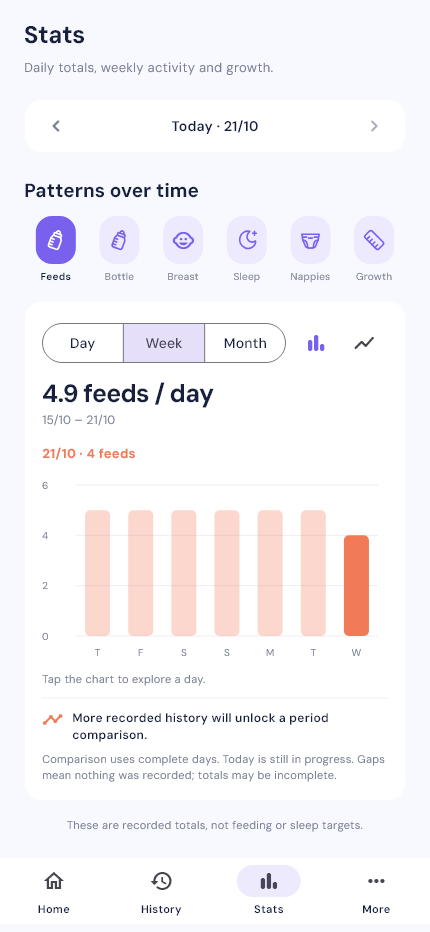
If the afternoon was not logged, say so. A count of four entries then means ‘four changes recorded’, not necessarily ‘four changes happened’. Correct clear mistakes while preserving honest gaps. Care that happened without an entry still happened, and that distinction matters when you explain the history.
Know when the observation matters more than the log
Nappies that are noticeably drier than usual, poor feeding or an unusual change in alertness deserve prompt healthcare advice. If your baby cannot be woken or is struggling to breathe, get emergency help through your local service. Do not wait to complete another 24-hour count.
For an appointment, bring a short representative period and explain known gaps. A clear question plus a few reliable observations can be more useful than a long, perfectly formatted export. The log helps you tell the story; your healthcare team assesses what it means.
Further guidance: NHS Wales: Signs of illness in babies
Sources & further reading
For the full guidance and advice for your circumstances, start with your local healthcare team and these resources.
NHS: Is my baby getting enough milk?NHS: How to change your baby's nappyNHS Wales: Signs of illness in babiesGeneral information only. This site and app do not diagnose, treat or monitor medical conditions. If your baby seems unwell, seek medical advice rather than waiting to collect more records.
A little more to explore

Nappy changes: a simple everyday routine
Get organised, clean gently and keep one clear record for each change.
Read guideNappy rash: gentle care and when to ask
Reduce irritation, note useful changes and know when a pharmacist or healthcare professional can help.
Read guide